

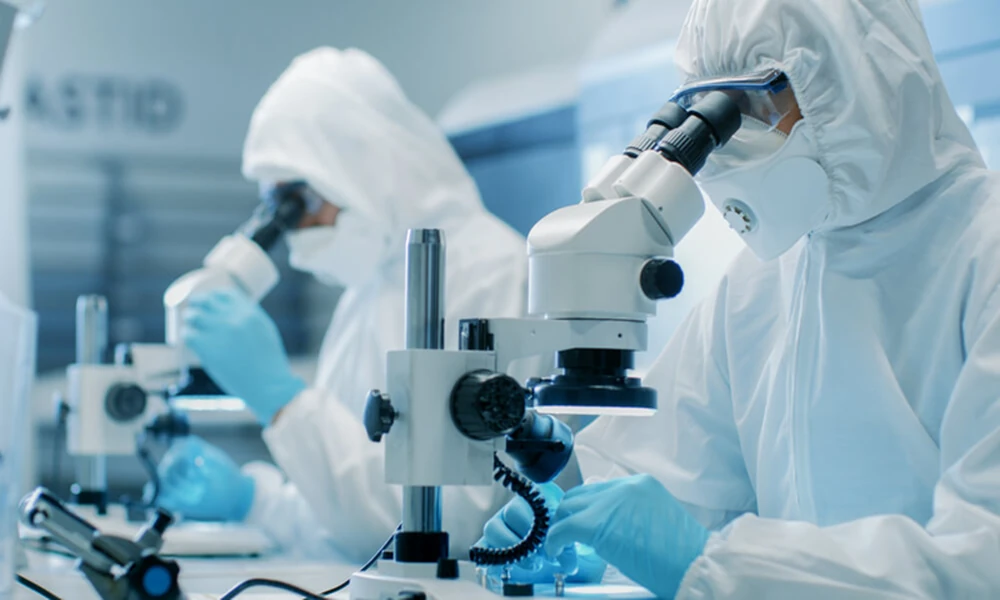
Regulatory auditors who assess medical device manufacturing sites spend a portion of every audit reviewing the production environment. They check the monitoring records. They look at whether the environmental parameters were in specification on the days the product batches in question were manufactured. They check whether excursions outside the limits were investigated and resolved before production continued. The reason they do this is simple: they know that a device manufactured in an out-of-specification environment may carry contamination that no finished product inspection will detect, and that contamination may harm the patient who eventually receives the device.
The clean room for medical devices is the physical and procedural infrastructure that gives regulators, manufacturers, and patients confidence that the production environment meets the standard required for safe device manufacture. Without it, that confidence has no foundation.
AMT’s Singapore manufacturing facility includes cleanroom environments for medical device component production, operated and monitored to the standards that international medical device regulations require.
Matching the Clean Room Class to the Device
Not every medical device requires the same level of environmental control, and specifying the wrong class in either direction creates problems. Under-specifying the class means producing in an environment with more contamination than the device’s risk profile can tolerate. Over-specifying wastes capital and operating cost on environmental controls that add no safety benefit for the specific device being manufactured.
ISO 14644-1 classifies clean rooms from ISO Class 1, the most controlled environment permitting fewer than ten particles larger than 0.1 microns per cubic metre, down to ISO Class 9, which is roughly equivalent to a well-ventilated ordinary room. Medical device production typically falls between ISO Class 5 and ISO Class 8, depending on the device category and the specific manufacturing step being performed.
Components for implantable devices or those contacting sterile body fluids are typically assembled in ISO Class 7 or better, where the particle concentration is maintained below 352,000 particles of 0.5 microns or larger per cubic metre. Less invasive device categories may be adequately produced in ISO Class 8. The device risk classification, the regulatory submission, and the manufacturer’s risk management process together determine the appropriate environmental class for each production step.
Clean room for medical devices at AMT is operated at the environmental class appropriate for the medical device components produced within it, with the class specified in the quality management system and confirmed through periodic room certification.
Environmental Monitoring During Production
Periodic revalidation confirms the room’s capability. But it does not tell you whether the room was in specification on the specific day a production batch was manufactured. Continuous or frequent environmental monitoring during production fills this gap.
Temperature, humidity, pressure differential, and particle count are measured at defined intervals during each production shift. The data is recorded and reviewed as part of the batch record for each production lot. If a parameter was outside its specified limit during manufacture of a particular batch, the batch is quarantined pending investigation of the excursion’s potential impact on product quality.
This linkage between environmental monitoring data and specific production batches is the mechanism by which environmental control translates into quality assurance. It is also the data that regulators review during audits to confirm that the clean room is genuinely controlled, not merely certified on paper.
Controlling What Enters the Room
The clean room boundary is only as effective as the controls on what crosses it. Components, tools, packaging, and consumables entering from outside must be introduced through a transfer hatch or anteroom where they are cleaned or verified as clean room compatible before proceeding into the production area.
Gowning of personnel follows a defined sequence in a dedicated anteroom, with each garment applied to prevent contact between outer clean surfaces and inner uncontrolled surfaces. Gloves are the last item applied and the first point of contact with production components. Glove integrity and hygiene are maintained throughout the shift through defined re-gloving procedures.
For medical device manufacturers seeking a contract manufacturer operating a properly validated clean room for medical devices with complete environmental monitoring records and ISO 13485 quality management, AMT provides the controlled cleanroom production environment that medical device component manufacturing in Singapore demands.
